
Key Takeaways
- Omnichannel customer service connects every channel, so the conversation and its history follow the customer.
- Omnichannel customer service delivers faster resolution, less repetition, increased spending, and more productive agents.
- An effective omnichannel customer service approach starts with the customer journey and a handful of customer service channels, not all of them at once.
- First-contact resolution, response time by channel, CSAT, customer effort, and channel switching indicate whether the setup is working correctly.
- While software connects channels, trained people make the difference in how well customers feel served.
A customer writes to complain about a billing problem, gets no response, calls the following day, and finally posts a message on Instagram. She re-explains the problem each time.
That is common: in the 2020 National Customer Rage Study, people with a complaint needed an average of 2.9 contacts to get it resolved. Omnichannel customer service is designed to end that cycle.
This guide includes a definition, the benefits of omnichannel customer service, channels, and a 6-step strategy, along with real-world use cases and the right metrics to measure.
What is Omnichannel Customer Service?
It connects all customer service channels (phone, email, chat, text, social media, etc.) to a single customer record. The conversation and its history move with the customer, so any agent can pick up where the previous agent left off.
A customer initiates a live chat regarding a delayed order and calls an hour later. The agent who answers sees the chat, the order number, and the promised delivery date, and solves the problem in a single step.
It’s also sometimes called omnichannel customer care or omni customer service.
The label matters less than the result: one continuous conversation, whatever channel the customer picks.
Omnichannel vs Multichannel Customer Service
Multichannel implies multiple channels, each functioning independently. Omnichannel is the same channels used in the same conversation.
| Factor | Multichannel Customer Service | Omnichannel Customer Service |
|---|---|---|
| Channels | Offered side by side and managed separately | Connected through one platform and one customer record |
| Customer history | Stays inside each channel and is often lost | Shared with every agent on every channel |
| Customer experience | Customers repeat themselves when they switch | Customers continue where they left off |
So, the answer to the question, “what is omnichannel customer service” is this: it’s the channels you have, and they finally communicate. Our guide to call center vs contact center explains how the same shift changed support teams.
Benefits of Omnichannel Customer Service
When every channel shares one record, five things improve.
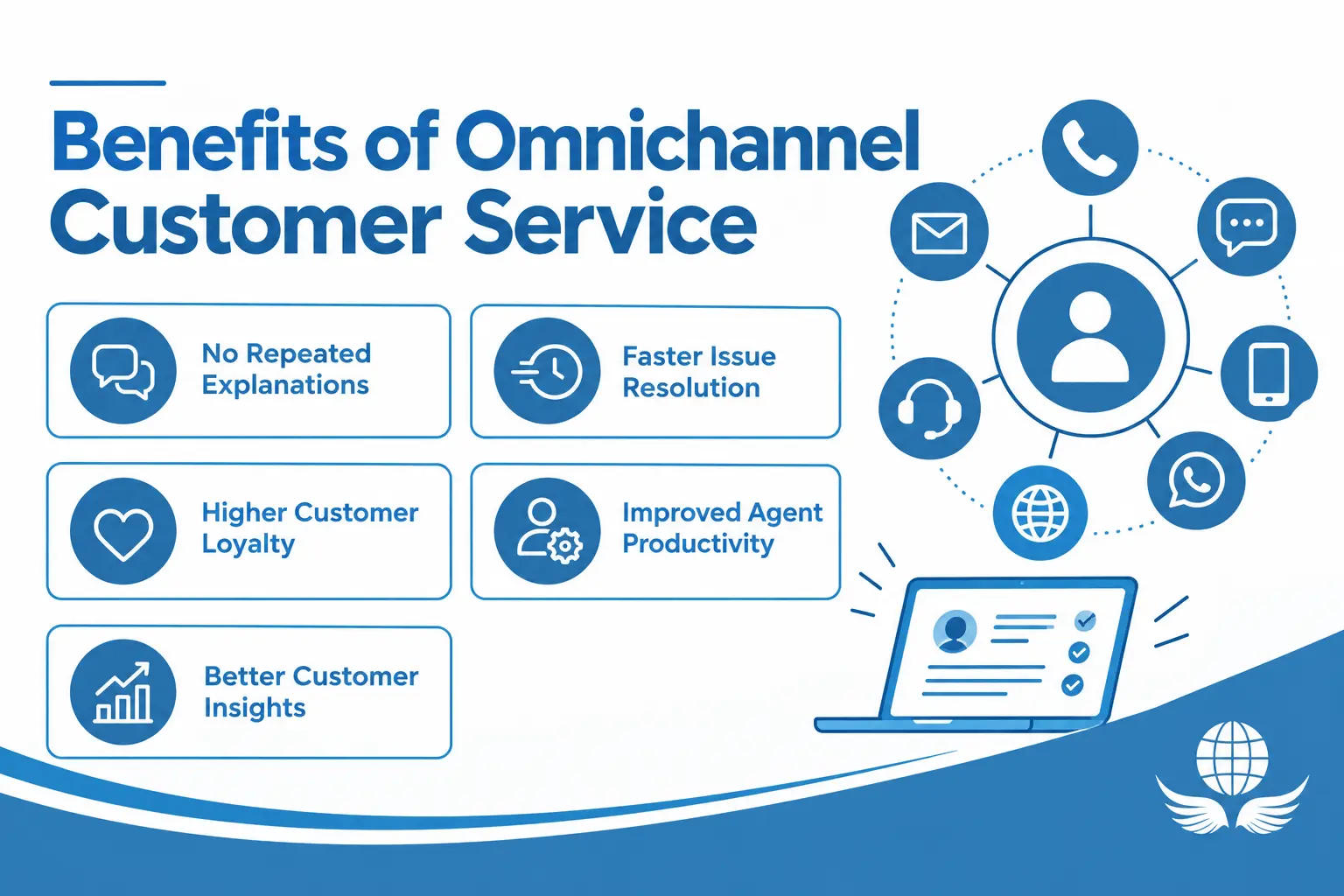
Customers Never Have to Repeat Themselves
A frequent bane of disjointed support is having to repeat the same story. If all agents can access the full history (from the initial message), the average number of contacts per problem drops to nearly three. Agents no longer ask questions that the business has already answered.
Faster Resolution
With full context, agents collect facts faster, and fewer cases are transferred between teams. Speed matters: nearly 80% of American consumers cite speed, convenience, knowledgeable help, and friendly service as the most important parts of a good experience.
Higher Spending and Loyalty
Connected channels also boost sales. According to a study of 46,000 shoppers, customers who shop across multiple channels spend 4% more in-store and 10% more online than those who shop through a single channel. The same pattern drives omnichannel retail customer service, which we cover later in this guide.
More Productive Agents
Agents work from a single perspective in each conversation rather than juggling four or five tools. An omnichannel support platform eliminates time spent searching and copying information, enabling agents to resolve issues and support more contacts per shift.
Better Customer Insight
With all interactions in one place, trends emerge: the kinds of questions that appear by chat, when customers give up, and which channel they prefer. Those insights help you make targeted fixes, not guesswork, that improve customer satisfaction.
Key Channels in Omnichannel Communication for Customer Service
Every channel has a task. Each should serve customers for what they use it for.
Phone: Still the Hub for Urgent Issues
Complex, urgent, and emotional issues still go to the phone. Gartner’s survey of 5,728 customers found that 64% would prefer companies not use AI in customer service, with a top concern that it would be harder to reach a human.
Tip: Keep the line staffed, or use a 24/7 answering service after hours.
Live Chat and SMS
Chat and text provide rapid response on your site and on the go. They suit order status checks and booking changes. Staffing is covered in our article on live chat outsourcing.
Tip: Show the expected wait time in the chat window.
Email is appropriate for detailed issues and anything that requires a written record.
Tip: Set a reply target, such as one business day, and send an automatic acknowledgment.
Social Media and Messaging Apps
When public complaints appear on social media, respond quickly and calmly, as others are watching. Send personal information to a private, secure channel.
Tip: Log social replies in the same customer record.
Self Service
FAQ pages and help centers can answer simple questions anytime and handle complex ones.
Tip: Add a clear route from every help article to a live person, because that is what good omnichannel support looks like.
How to Build an Omnichannel Customer Service Strategy
Do the following six steps sequentially.
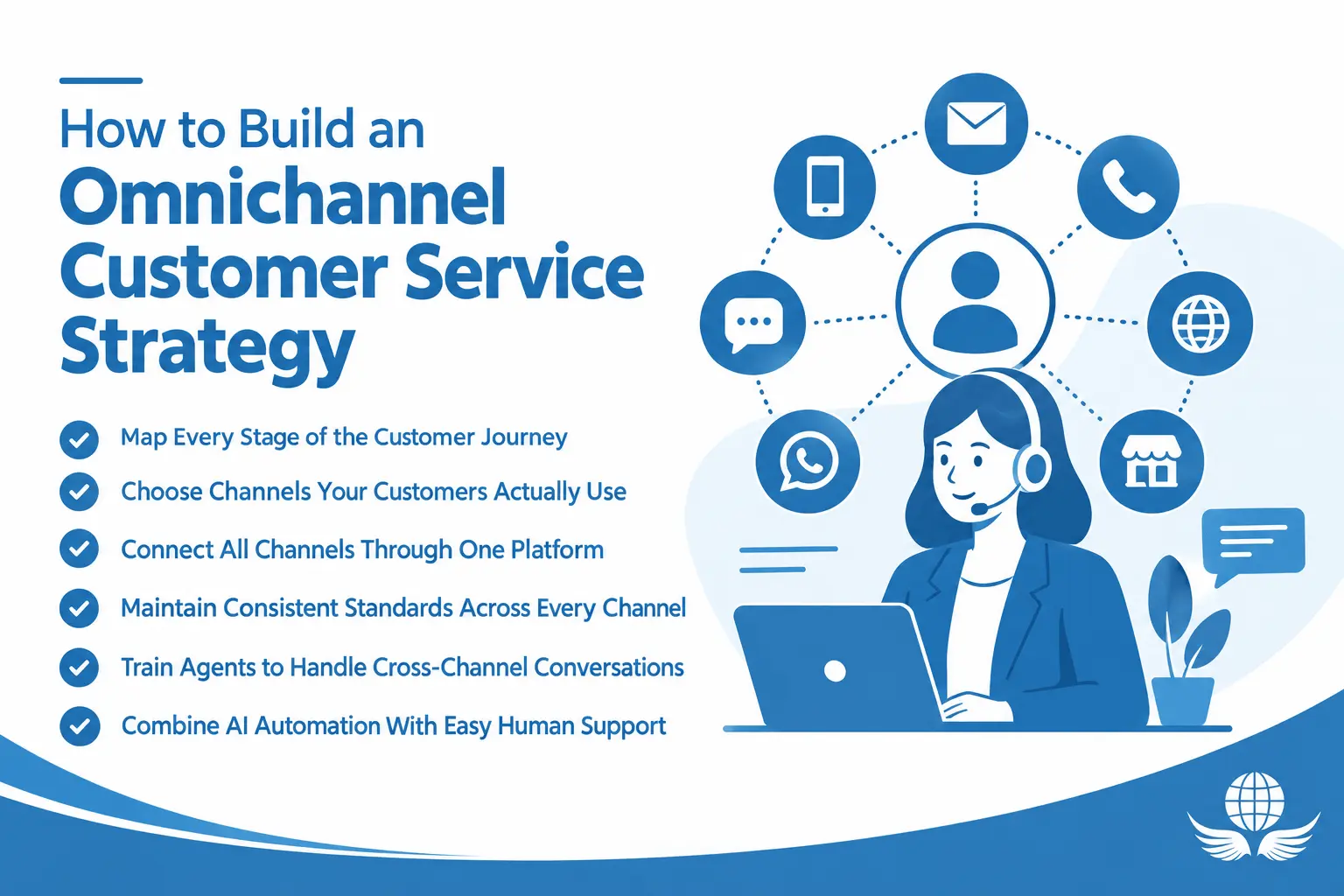
1. Map Your Customer Journey
Include all your contact methods customers can use today, including phone lines, email addresses, web forms, chat, social accounts, and in-person visits. Next, observe some actual situations and document when customers wait or repeat themselves.
Action: Review 10 recent cases that required more than one touchpoint, and identify where they failed.
2. Choose the Channels Your Customers Actually Use
It is better to run three channels well than seven badly. Review existing sources of volume. In Canada, good omnichannel communication for customer service may also mean offering every channel in English and French, which French call center services can provide.
Action: Rank your channels by volume and pause the weakest.
3. Connect Everything in One Platform
Connect all channels to a single inbox in your CRM, and make sure all agents can access the full history. An omnichannel helpdesk assigns each contact to the right person and keeps a single ticket for an issue, no matter the channel. Some vendors call this omnichannel customer service.
Action: Make a list of all the tools your agents use when answering a call.
4. Set the Same Standards on Every Channel
The answer provided to customers via chat should be the same as if they called. Define a single tone of voice, a single set of answers, and a maximum response time for each channel. One of the most common issues in omnichannel customer service management is inconsistent answers, which a shared knowledge base can solve for the majority of cases.
Action: Identify response targets for each channel and include them with the team.
5. Train Agents to Work Across Channels
Agents need clear writing for chat and email and empathy for calls. Teach a short handover line for conversations that change channel, such as: “I can see your chat from this morning about the late delivery, so you do not need to repeat it.”
Action: Incorporate channel handover practice into your next training session.
6. Use AI and Automation, With an Easy Path to a Human
Let bots handle simple inquiries and route after-hours triage tasks, such as gathering an order number before answering a call. Make sure you can transfer quickly to a live agent, including the conversation history.
Action: Build and test your own chatbot to see how long it takes to reach a human.
Omnichannel Customer Service Management: Metrics to Track
Read a short list of indicators and review them on a regular basis:
- First contact resolution: Percentage of issues handled on the first contact, across all channels.
- First response time by channel: Time taken to get a response over phone, chat, email or social media.
- Customer satisfaction (CSAT): Customer’s rating of each interaction.
- Customer effort score: How easy it was to obtain assistance.
- Channel switching rate: The number of times customers switch to other channels when their first channel fails.
Review the entire customer journey monthly to spot issues that weekly data might miss.
Omnichannel Customer Service Use Cases
Omnichannel Retail Customer Service
A Calgary shopper calls to inquire about a jacket’s availability and buys it online, then calls again to update the pickup location. The agent views the chat and order and then switches the store on the same call.
Retail stores and online support should also be interconnected: In May 2026, 6.8% of retail trade in Canada took place online, with most purchases occurring in retail stores. Retail and e-commerce call center services can be extended to cover retailers.
Healthcare and Professional Services
A patient calls to set up an appointment, then receives a text reminder and follow-up instructions by email. Private information must be handled securely, in compliance with legislation like PIPEDA and provincial health privacy legislation. Specialized healthcare call center services can perform this task.
Home Services and Small Businesses
A plumbing or HVAC company receives after-hours calls, web forms, and Facebook messages. One team answers all questions, verifies the address from previous jobs, and books the visit. In a small business without night staff, omnichannel support means missed messages can turn into booked jobs.
What to Look For in an Omnichannel Support Platform
When evaluating any omnichannel customer service platform, make sure to consider these key points.
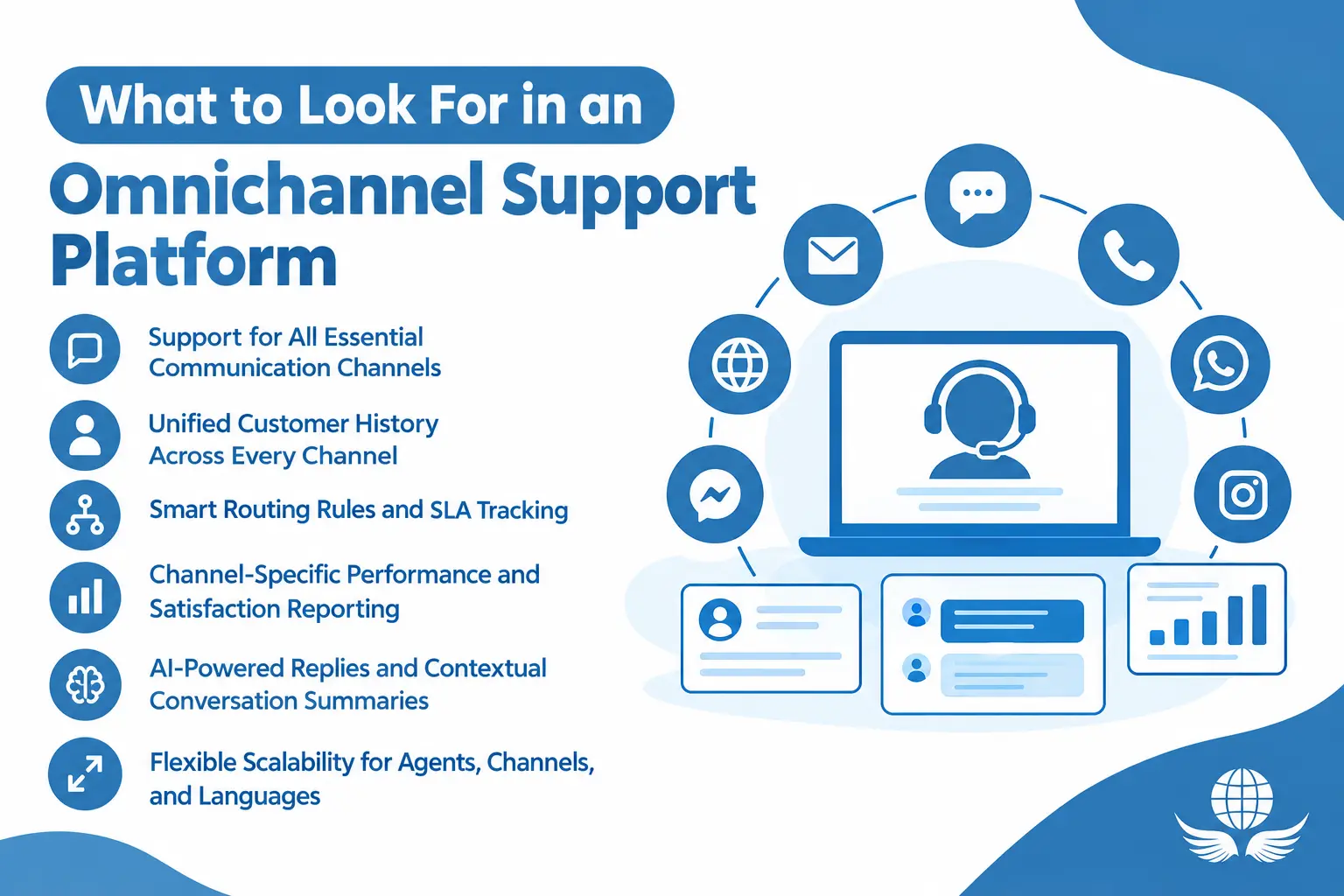
- Covers all your channels: Phone, email, chat, SMS, and the social apps your customers use.
- Unified customer view: Full history from every channel on one screen.
- Routing and SLAs: Rules to funnel all contacts to the appropriate agent and alert overdue responses.
- Reporting: Response time, resolution, and satisfaction broken down by channel.
- AI capabilities: Suggested replies, conversation summaries, and handing off to bots with context.
- Scales with you: Adds channels, agents, and languages without a rebuild.
An omnichannel helpdesk is only part of the answer. But without trained people to operate the software, it’s not enough.
How Agents Republic Delivers Omnichannel Customer Care
Agents Republic is a Vancouver-based BPO company that provides trained live agents for phone, chat, email, SMS, and social messages, 24/7, for businesses in Canada and the United States. Our customer service teams meet your standards on every channel, including call center services that cover peak season and after-hours.
At no additional cost, dedicated agents work in more than 100 languages within your current omnichannel customer service platform, CRM, and ticketing system. For simple, repeatable calls, shared answering plans cover English-language phone support. People and process make omnichannel support work.
Frequently Asked Questions (FAQs)
What is an example of omnichannel customer service?
A customer starts a live chat about a damaged order and calls the same day. The agent who answers the call can already view the chat, order number, and pictures the customer provided, so they don’t need to repeat information. On that call, the agent arranges a replacement and sends a confirmation email with the new delivery date.
Is omnichannel customer support worth it for small businesses?
Yes, as long as you start small. Link to or 3 channelsthroughr customers arready ususefosuch ashone, email, weand b chat a,nd ensure thl agents hacanccess toe enfullonversation history. Outsourcing gives small businesses evening and weekend coverage on those channels without hiring a whole team, making omnichannel customer support affordable as the business expands.
What is the difference between omnichannel and multichannel support?
Multichannel support provides multiple channels that operate independently, and customer history stays within each channel and is often lost. Omnichannel support links the same channels to the same customer record, so the conversation moves with the customer. The comparison table earlier in this guide sets out the differences in channels, history, and customer experience side by side.
Final Thoughts
Omnichannel customer service is not about adding channels. It’s about bringing your channels together so customers don’t have to start over. Take the trip, link two or three channels well, and measure weekly. If your team can’t cover all channels every hour, outsourcing omnichannel customer support can help fill the gaps.
Call +1 (604) 210-8100 or request a quote to give every customer one continuous conversation.